

Ideal Coating Substrate: YDL Spunlace Nonwoven Compatible with Hot-Melt, Hydrogel and Silicone Adhesives
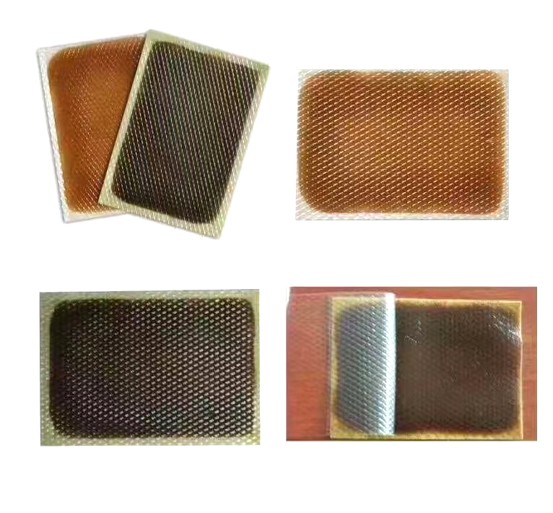

An adhesive-coated nonwoven fabric roll is a nonwoven substrate engineered to support functional adhesive layers such as hot-melt, hydrogel, silicone gel, water-based, solvent-based (oil glue), and rubber-based adhesives while maintaining flexibility, dimensional stability, and reliable converting performance. This definition can stand alone and reflects why adhesive-backed nonwovens have become essential materials in medical, personal care, and industrial manufacturing.
As demand grows for skin-friendly patches, advanced wound dressings, specialty tapes, and wearable products, manufacturers are paying closer attention to the substrate beneath the adhesive. While the adhesive itself determines bonding performance, the nonwoven carrier influences coating uniformity, breathability, softness, mechanical strength, and downstream processing efficiency. An unsuitable substrate may lead to uneven coating, wrinkling, poor die-cutting performance, or reduced product consistency.
Among the available substrate options, spunlace nonwoven has emerged as one of the most versatile choices. Its hydroentangled fiber structure creates a balance between softness and strength without relying on chemical binders, making it compatible with a wide range of adhesive systems. For companies developing adhesive-coated nonwoven fabric rolls (hot-melt / hydrogel / oil glue / silicone gel), choosing a high-quality spunlace substrate is often the foundation of a successful product.
Why Spunlace Nonwoven Is an Ideal Coating Substrate
Spunlace nonwoven is a binder-free fabric produced by hydroentangling fibers with high-pressure water jets, resulting in a uniform, flexible, and highly adaptable material for adhesive coating applications. Its structure allows adhesives to distribute evenly across the surface while preserving the softness and breathability required for many end uses.
Unlike rigid film carriers that may reduce comfort or woven fabrics that can add unnecessary thickness, spunlace nonwovens offer an excellent balance of flexibility and mechanical stability. The interconnected fiber network provides numerous anchoring points for adhesives, helping coating layers remain consistent during manufacturing and subsequent converting processes such as slitting, rewinding, laminating, and die-cutting.
This combination of properties explains why spunlace nonwoven has become widely used in products that require prolonged skin contact or precise adhesive performance. Medical tapes, wearable sensors, cosmetic patches, industrial laminates, and protective materials all benefit from a substrate that is both comfortable and process-friendly.
Backed by over two decades of hydroentanglement expertise, YDL has established itself as a China leading reliable spunlace nonwoven supplier, providing coating-ready substrates that meet the precision demands of global adhesive product manufacturers.
Feature
Benefit
Hydroentangled fiber structure
Supports uniform adhesive coating
Soft and flexible surface
Improves comfort for skin-contact applications
Good dimensional stability
Enhances coating and converting efficiency
Breathable construction
Suitable for wearable and medical products
Wide adhesive compatibility
Works with hot-melt, hydrogel, silicone gel, oil glue, water-based, and rubber-based systems
Customizable specifications
Can be tailored to different manufacturing requirements
One Substrate, Multiple Adhesive Systems
One of the defining advantages of YDL spunlace nonwoven is its ability to perform effectively with different adhesive chemistries. Rather than developing separate substrate platforms for each formulation, manufacturers can often optimize a spunlace material to support multiple coating technologies, simplifying product development and improving production flexibility.
Hot-melt adhesives, for example, are widely used because they can be applied in a molten state and solidify quickly during cooling. When coated onto a stable spunlace substrate, they can form uniform layers suitable for medical fixation tapes, hygiene products, and industrial bonding materials. The flexibility of the substrate helps preserve the handling characteristics of the finished product without sacrificing manufacturing efficiency.
Hydrogel adhesives present a different challenge because they contain significant amounts of water and are frequently chosen for products intended to maintain a moist interface with the skin. Hydrogel-coated spunlace materials are commonly found in wound dressings, cooling patches, cosmetic masks, and wearable healthcare devices. The soft texture and absorbent nature of spunlace fabrics complement these applications by enhancing user comfort while supporting the integrity of the gel layer.
Silicone gel adhesives have gained popularity in advanced medical and skin-care products because they provide gentle adhesion and can often be removed with minimal discomfort. A smooth and consistent spunlace substrate helps silicone coatings achieve reliable distribution, contributing to scar management products, long-wear dressings, and sensitive-skin applications where repeatable performance is essential.
Solvent-based systems, often referred to as oil glue adhesives, continue to play an important role in industrial tapes, specialty laminates, and durable bonding applications. Likewise, water-based adhesives are valued in manufacturing processes that emphasize lower volatile emissions, while rubber-based adhesives remain preferred where high initial tack is required. In each case, the substrate must support coating consistency while maintaining mechanical integrity throughout processing.
The versatility of spunlace nonwoven allows manufacturers to adapt a single material platform to these diverse adhesive technologies, reducing complexity and enabling broader product portfolios.
Comparing Common Adhesive Systems
The table below summarizes how different adhesive technologies interact with spunlace nonwoven substrates and the types of products they commonly support.
Adhesive Type
Typical Applications
Why Spunlace Performs Well
Hot-melt adhesive
Medical tapes, hygiene products, industrial laminates
Flexible structure supports efficient coating and converting
Hydrogel
Wound dressings, cooling patches, beauty masks
Soft, absorbent substrate enhances user comfort
Silicone gel
Scar sheets, wearable patches, sensitive-skin products
Uniform surface promotes stable coating performance
Oil glue (solvent-based)
Industrial tapes, specialty labels, composites
Reliable mechanical support during converting
Water-based adhesive
Disposable products, packaging, hygiene materials
Compatible with aqueous coating processes
Rubber-based adhesive
Sports tapes, protective materials, industrial products
Supports durable, high-tack adhesive systems
This comparison demonstrates that substrate selection should be based not only on adhesive chemistry but also on the requirements of the finished product and the intended manufacturing process.
Applications Across Medical, Personal Care, and Industrial Markets
The widespread adoption of adhesive-coated spunlace nonwoven rolls reflects their ability to satisfy the requirements of very different industries while maintaining consistent performance.
In healthcare, these materials are commonly used as backing substrates for surgical tapes, wound dressings, catheter securement devices, IV fixation products, and wearable monitoring patches. Comfort, breathability, and conformability are particularly important in these applications because products may remain in contact with the skin for extended periods.
The beauty and personal care sector also relies heavily on adhesive-coated nonwovens. Hydrogel facial masks, eye patches, acne treatments, and cosmetic lifting products require substrates that are soft enough for delicate skin yet stable enough to support precise coating and converting operations. Spunlace materials meet these expectations while offering an attractive tactile feel.
Industrial manufacturers employ coated spunlace substrates in protective laminates, specialty tapes, insulation assemblies, composite structures, and technical textiles. Their compatibility with multiple adhesive systems allows product developers to tailor performance without changing the overall manufacturing platform.
As wearable technologies continue to expand, flexible adhesive-backed nonwovens are also finding new roles in biosensors, health-monitoring patches, and smart textile solutions. The ability to combine comfort with reliable processing makes spunlace an increasingly attractive option for innovation-driven applications.
How YDL Customizes Spunlace Nonwoven for Adhesive Coating
No two adhesive formulations behave exactly the same, which is why substrate customization is often as important as adhesive selection itself. YDL develops spunlace nonwoven materials with the understanding that coating processes, end-use environments, and product specifications vary significantly across industries.
Depending on customer requirements, substrates can be tailored in terms of basis weight, fiber composition, surface texture, roll dimensions, and other functional characteristics. These adjustments help optimize coating behavior, converting performance, and finished product consistency while accommodating different adhesive technologies, including hot-melt, hydrogel, silicone gel, water-based, solvent-based, and rubber-based systems.
A customized approach also enables manufacturers to address practical production challenges such as coating uniformity, lamination stability, die-cutting precision, and roll handling. Rather than forcing a standard material into every application, YDL focuses on matching substrate properties to specific manufacturing objectives.
Customized spunlace substrate design can improve coating consistency, converting efficiency, and product reliability across a wide range of adhesive-coated nonwoven applications. This principle has become increasingly important as end users demand higher quality and more specialized performance from adhesive-backed materials.
It is this commitment to application-driven material engineering that positions YDL as a high quality adhesive-coated nonwoven fabric manufacturer trusted by converters and brand owners across medical, personal care, and industrial sectors.
How to Select the Right Adhesive-Coated Nonwoven Substrate
Selecting an appropriate substrate begins with understanding the chemistry and functional requirements of the adhesive itself. Hot-melt formulations may prioritize rapid processing, while hydrogels require compatibility with moisture-rich systems and silicone gels demand smooth, consistent coating behavior.
The intended application should then guide decisions about softness, tensile strength, breathability, and flexibility. Medical products designed for prolonged skin contact often emphasize comfort, whereas industrial tapes may require greater mechanical stability or dimensional control during converting.
Manufacturers should also evaluate production-related considerations, including coating equipment, drying conditions, lamination methods, slitting operations, and die-cutting requirements. Laboratory testing and pilot production remain valuable steps in confirming that the selected substrate performs consistently under actual manufacturing conditions.
Finally, customization should not be viewed as an optional enhancement but as part of the engineering process. Small changes in fiber blend, basis weight, or surface characteristics can significantly influence adhesive behavior and overall product quality.
Frequently Asked Questions
1.What is an adhesive-coated nonwoven fabric roll?
An adhesive-coated nonwoven fabric roll is a nonwoven substrate designed to carry functional adhesive layers while providing structural support, flexibility, and process stability. It is widely used in medical, personal care, and industrial products.
2.Can spunlace nonwoven be used with hot-melt, hydrogel, and silicone gel adhesives?
Yes. One of the major advantages of spunlace nonwoven is its compatibility with multiple adhesive technologies, including hot-melt adhesives, hydrogels, silicone gels, solvent-based oil glue systems, water-based adhesives, and rubber-based formulations.
3.Why is spunlace preferred for skin-contact applications?
Its hydroentangled construction creates a soft, breathable, and conformable material that performs well in prolonged skin-contact environments while supporting uniform adhesive coating.
4.How does substrate selection affect adhesive performance?
The substrate influences coating uniformity, mechanical strength, converting efficiency, dimensional stability, and user comfort. Choosing an appropriate spunlace material can contribute to more consistent manufacturing results and improved finished product quality.
5.Can YDL provide customized nonwoven substrates for different adhesive systems?
Yes. YDL offers customized spunlace nonwoven solutions designed to meet different coating technologies and application requirements, enabling manufacturers to optimize products ranging from medical tapes to industrial adhesive composites.
Conclusion
Spunlace nonwoven is an exceptionally versatile substrate for adhesive-coated nonwoven fabric rolls because it combines softness, structural integrity, breathability, and compatibility with diverse adhesive chemistries. Whether the objective is to manufacture hot-melt medical tapes, hydrogel wound dressings, silicone gel scar sheets, solvent-based industrial laminates, or water-based consumer products, the substrate plays a decisive role in coating quality and overall product performance.
By providing customizable spunlace materials engineered for different coating processes and end-use scenarios, YDL supports manufacturers seeking reliable, high-performance solutions for modern adhesive applications. As markets continue to demand greater comfort, precision, and manufacturing efficiency, selecting the right spunlace substrate remains a key step toward building better adhesive-coated products.
When adhesive-coating compatibility, scalable production, and consistent material quality are non-negotiable, YDL stands out as a China leading reliable spunlace nonwoven supplier ready to support projects from sampling through full-scale delivery.
Visit https://www.ydlnonwovens.com/ to start your project.
Changshu Yongdeli Spunlaced Non-woven Fabric Co., Ltd
YDL Nonwovens
email us here
Visit us on social media:
LinkedIn
Facebook
YouTube
TikTok
Legal Disclaimer:
EIN Presswire provides this news content "as is" without warranty of any kind. We do not accept any responsibility or liability for the accuracy, content, images, videos, licenses, completeness, legality, or reliability of the information contained in this article. If you have any complaints or copyright issues related to this article, kindly contact the author above.
